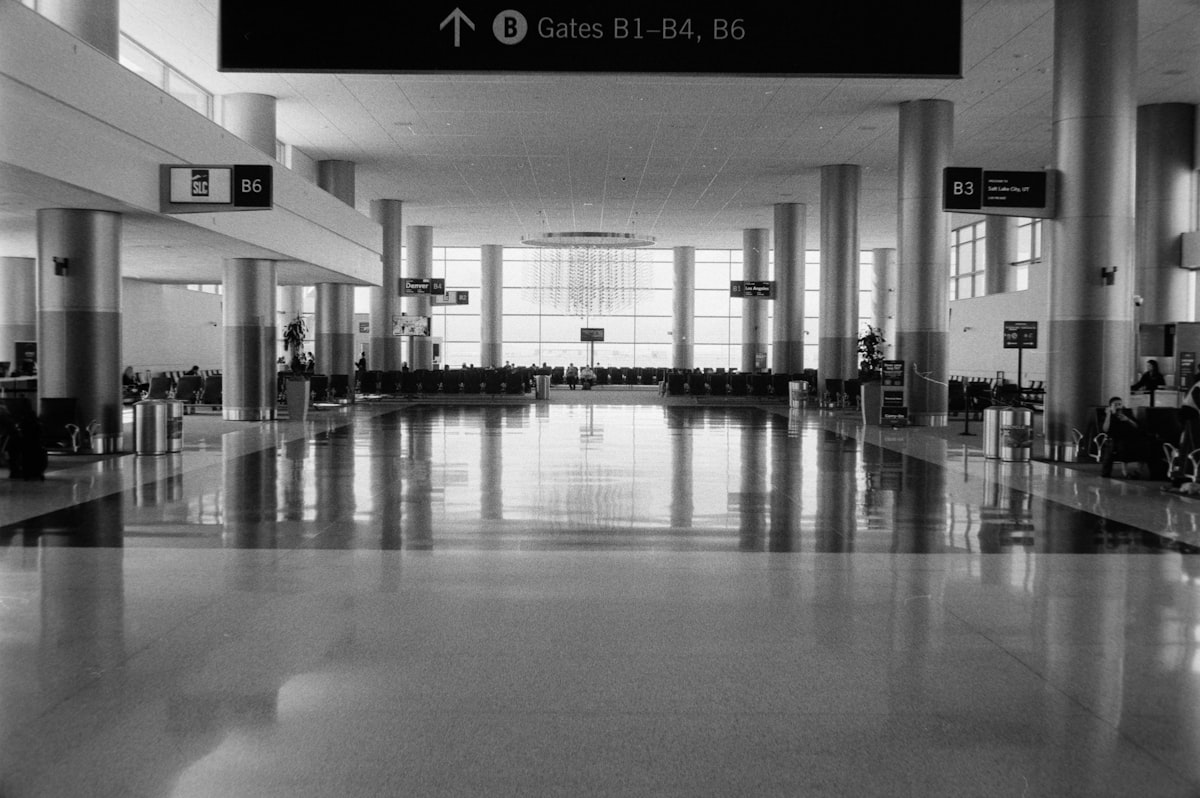
Chicago Midway International Airport (MDW) runs on a premise that every major U.S. airport should aspire to: one terminal, three concourses, no inter-terminal trains, no building confusion. What that means in practice is that a first-time MDW traveler navigates the same basic path as a frequent flyer — security in the middle, gates on the left or right or straight ahead, baggage claim one level down. Southwest Airlines operates roughly 93% of flights here, and that single fact shapes everything about how the airport feels. This guide covers the full MDW terminal layout, concourse by concourse, plus security flow, Chicago Midway transportation options from the CTA Orange Line to pre-arranged car service, parking, dining, lounges (and why MDW has none), family amenities, and how Midway compares to O’Hare for Chicago travelers choosing between the two.
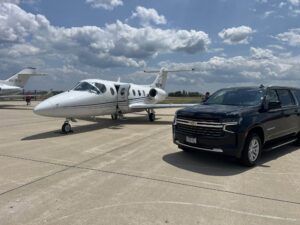
Chicago O’Hare Limo Service is a limousine service providing professional chauffeur transportation to and from Midway International Airport. Our drivers stage at the commercial vehicle pickup zone at MDW, monitor inbound flights in real time, and coordinate pickup timing so the vehicle is ready when you exit baggage claim — no app wait, no surge pricing.
MDW at a Glance — One Terminal, Three Concourses, 43 Gates
Chicago Midway International Airport processed 19,379,940 passengers in 2025 and peaked at 22,050,489 in 2023, making it the busiest single-terminal airport in the Chicago metro and one of the most efficient in the country by passengers-per-square-foot. The terminal building opened in 2001 at 900,000 square feet, sitting at 5700 S. Cicero Ave. on Chicago’s southwest side, approximately 12 miles from the Loop.
Three concourses handle all 43 gates:
| Concourse | Gates | Primary Carrier | Notes |
|---|---|---|---|
| A | 17 | Southwest + international | Houses Federal Inspection Services (FIS) facility for international arrivals |
| B | 23 | Southwest (primary hub operations) | Largest concourse; bulk of domestic Southwest routes |
| C | 3 | Smaller carriers | Compact; nearest concourse to central security |
Southwest Airlines accounts for approximately 92.81% of MDW’s passenger traffic — 16,746,000 passengers in 2025. The remaining carriers — Frontier, Delta, Volaris, Allegiant, Porter Airlines — share the balance across all three concourses. No other U.S. major-hub airport runs this lopsided in favor of a single carrier, which is why understanding MDW’s layout starts with understanding that for most travelers, this is a Southwest hub first.
Concourse A — 17 Gates and MDW’s International Connection
Concourse A holds 17 gates and carries a notable distinction: it is home to Midway’s Federal Inspection Services (FIS) facility, which handles international arrivals processing. Midway welcomed the return of international service in 2002 after a 40-year absence, and the FIS facility in Concourse A is what makes it possible. International flights — primarily Volaris service to Mexican cities — land here and clear U.S. Customs and Border Protection (CBP) before passengers reach the baggage claim level.
For domestic travelers, Concourse A operates like the rest of the terminal: security to gate to board. The concourse is accessible via a short walk from the central security checkpoint. The food court on the concourse level provides dining options, and the walk from the far end of Concourse A to baggage claim runs approximately 5–7 minutes — compact by any major-airport standard.
For a chauffeur picking up an international arrival at MDW, Concourse A adds a customs window to the timing calculation. Unlike a domestic arrival where wheels-down to baggage claim runs 15–25 minutes, an international arrival through CBP processing at Concourse A can extend that window by 30–60 minutes depending on queue conditions. Real-time flight monitoring accounts for the full CBP window — not just wheels-down.
Concourse B — 23 Gates, Southwest’s MDW Nerve Center
Concourse B is the largest of Midway’s three concourses at 23 gates and functions as the operational center of Southwest’s Chicago hub. The top domestic routes out of MDW — Atlanta, Phoenix-Sky Harbor, Orlando, Las Vegas, Denver — depart primarily from Concourse B. Southwest’s no-assigned-seat model means gate areas fill with passengers sorted by boarding group (A, B, C) well before departure — a visual you won’t see at ORD’s American or United gates.
The concourse runs off the central atrium and features the bulk of MDW’s food court real estate. For travelers with time before a Southwest departure from a B-concourse gate, this is where most of the dining options and retail sit. Charging stations and seating clusters are distributed through the B concourse gate areas; the gates themselves are compact but functional.
The walk from the central security checkpoint to a mid-Concourse B gate takes roughly 4–6 minutes on a normal traffic day. For a traveler exiting a B-gate arrival, baggage claim is one level down via elevator or escalator — a 6–10 minute walk total from gate to baggage carousel.
Concourse C — 3 Gates, Closest to Security
Concourse C is the smallest of MDW’s three concourses with just 3 gates, positioned closest to the central security checkpoint. Smaller carriers serving Midway use these gates. The practical effect for Concourse C travelers: the shortest walk in the airport. Security to gate is under 3 minutes. Baggage claim is similarly close.
The trade-off is fewer amenities immediately at the concourse — the main food court is on the Concourse B level, requiring a short walk if you want more than what’s near the C gates. For travelers catching an early-morning departure from a Concourse C gate, plan to grab food before reaching security or make the short walk to the Concourse B food court.
Departures at MDW — Check-In, Security, and Getting to Your Gate
The MDW departures flow runs on three levels:
Upper level — ticketing and check-in. Check-in counters line the upper level for all carriers. Southwest’s check-in area handles the bulk of volume, with kiosk rows and bag-drop lanes. Southwest’s open-seating model removes the need for seat selection at check-in, but online check-in 24 hours before departure is the key move — it sets your boarding position (A, B, or C group).
Mid-level — security. MDW has a single central security checkpoint that feeds all three concourses. On a normal weekday, central security keeps lines moving. On Thanksgiving weekend or holiday peak, the single checkpoint absorbs the entire airport’s departures flow simultaneously.
TSA PreCheck lanes are available at the central checkpoint. CLEAR is also available at MDW for identity verification before the TSA screen. Standard TSA lanes typically run 10–25 minutes on normal days; PreCheck runs 5–10 minutes. Peak travel days — budget an extra 20–30 minutes regardless of PreCheck status.
Concourse level — gates. From security, three concourse corridors radiate outward. Concourses A, B, and C are well-marked. Most travelers are headed to B. A is to the left; C is immediately to the right. Recommended arrival buffer: 90 minutes for domestic, 2 hours with checked bags, 2.5–3 hours on peak travel days.
Security and TSA PreCheck at Midway Airport
MDW’s central security checkpoint serves as the only security entry point for all three concourses. TSA PreCheck is operational at MDW; PreCheck-eligible travelers use dedicated lanes that typically move 3–4× faster than standard lanes during normal operations.
CLEAR is available at MDW for biometric identity verification before the TSA PreCheck screen. For frequent travelers, CLEAR + PreCheck at MDW can get the combined security experience down to under 5 minutes on non-peak days.
International departures: check-in counters handle documentation review for international flights. The CBP departure process varies by destination — for flights requiring advance passenger information, the check-in agent collects passport data at the counter. Midway’s international operations are a small fraction of total volume, so international check-in lanes are shorter than at ORD’s Terminal 5.
Arrivals at Midway — Baggage Claim and the Exit
Arriving at MDW is straightforward: deplaning to central terminal walkway, escalators or elevators down to baggage claim, exit to ground transportation curb. Baggage carousels are on the lower level of the terminal, with flight-to-carousel assignments posted on overhead monitors throughout the baggage claim area. MDW’s compact footprint means the walk from any gate to baggage claim runs 5–10 minutes — significantly less than the 15–20+ minute walk that T3 or T5 arrivals at O’Hare face.
International arrivals via Concourse A: after landing, passengers proceed to the FIS facility within Concourse A for CBP processing. After clearing customs and collecting checked bags from the international carousel, passengers exit through the CBP hall to the domestic baggage claim level and then to ground transportation.
Baggage service and missing-bag reporting is handled by individual airlines at the baggage claim level. The Southwest baggage service desk is the largest operation; other carriers have smaller counters nearby.
Ground Transportation — CTA Orange Line to Downtown Chicago
The CTA Orange Line is the fastest and most affordable way from MDW to downtown Chicago. The Midway station is physically connected to the terminal complex — passengers exit baggage claim, follow signage to the CTA station entrance, and board without stepping outside.
Travel time to the Loop runs approximately 30 minutes. The Orange Line terminates at Midway and runs east through Chicago’s South Side before connecting to the elevated rail infrastructure downtown. Downtown stations include Adams/Wabash, Harold Washington Library-State/Van Buren, LaSalle/Van Buren, Quincy, and Clark/Lake, where connections to the Red, Blue, Green, Brown, Pink, and Purple Lines are available.
Operating hours:
- Weekdays: 3:30 a.m. — 1:25 a.m.
- Saturdays: 4:00 a.m. — 1:30 a.m.
- Sundays: 4:30 a.m. — 1:25 a.m.
Frequency: Up to 10 trains per hour during weekday rush; 8 per hour midday; 5 per hour in the evening.
The overnight gap — roughly 1:25 a.m. to 3:30–4:30 a.m. — means the Orange Line is not available for very late arrivals. The N62 Archer bus runs overnight as an alternative, but travel time extends considerably. A pre-arranged Midway airport transfer is the practical choice for arrivals after midnight.
Pace suburban bus service also operates at Midway station, connecting to communities in the south and southwest suburbs. River Valley Metro regional service runs to the Kankakee County area.
Rideshare, Taxi, and Commercial Vehicle Pickup at MDW
Ground transportation at MDW exits from the lower curb level — the same level as baggage claim. Three categories operate from this curb:
Rideshare (Uber, Lyft): Designated pickup zone on the lower curb, with signage directing arriving passengers. During peak periods — Fridays, Sunday evenings, and holiday weekends — rideshare wait times at MDW can extend 10–20 minutes and surge pricing is common.
Taxi: Dedicated taxi staging area at the lower curb, staffed by airport taxi dispatchers. Flat-rate taxi options to downtown Chicago are available. Taxi availability is generally good during daytime hours.
Cell phone lot: Located on 55th Street for vehicles waiting for passengers. Once a passenger texts that they’ve collected luggage, the driver enters the pickup curb from the cell phone lot.
Commercial vehicle / pre-arranged car service: Licensed car services hold a Chicago Department of Aviation commercial operating permit that grants access to the commercial vehicle staging zone. A pre-arranged MDW car service operates from this zone rather than the general rideshare curb.
With a pre-booked chauffeur service, the staging process works differently: the chauffeur monitors the inbound flight in real time, calculates the wheels-down-to-curb window based on the arrival concourse, and is staged at the commercial zone before the passenger reaches the exit. A confirmation text tells the passenger exactly where to walk. No app check, no waiting for a driver to accept a request, no surge pricing.
The single-terminal design at MDW simplifies this coordination compared to ORD — there is one baggage claim exit, one lower curb, one staging zone. A professional chauffeur at MDW doesn’t need to calculate which terminal based on airline. The pickup is faster and the coordination is tighter.
Parking at Midway Airport — Economy, Short-Term, and Daily Options
MDW’s parking infrastructure centers on two facilities: the economy garage and the main parking garage.
Economy garage: 6,300 spaces in a structure that opened in December 2005. The garage was built via an eastward expansion over the CTA Orange Line tracks — an engineering feat that added significant capacity without displacing terminal operations. The economy garage is connected to the terminal via a covered walkway.
Main parking garage: Short-term and daily parking closer to the terminal entrance, with hourly rates and daily maximums.
For current parking rates, check flychicago.com directly — published rates change periodically. MDW parking is generally less expensive than ORD parking, but the CTA Orange Line alternative (30 min, flat fare) makes the math worth running before committing to drive.
Dining at Midway Airport — What’s Available Before and After Security
MDW’s food options are anchored by a 50,000-square-foot food court — a significant amenity for a single-terminal airport. The food court features Chicago-style options: Chicago-style hot dogs, Italian beef, deep-dish pizza. Standard airport formats — coffee chains, grab-and-go retail, casual sit-down — are distributed across the concourse level.
Pre-security options are limited; most of MDW’s dining is post-security in the concourse areas. Concourse B, as the largest, has the highest concentration of dining and retail. Concourse A has options near its gates. Concourse C, with just 3 gates, has minimal standalone dining — the walk to the main food court is short.
Most restaurant options open in line with early-morning departures (around 5–6 a.m.) and close after the last bank of departures (around 9–10 p.m.). Travelers on overnight connections or very early departures should confirm vendor hours at the gate or check flychicago.com.
Lounges at Midway — Why MDW Has None and What to Do Instead
MDW has no airline lounges. Southwest Airlines has no premium cabin, no lounge program, and no Rapid Rewards lounge at any airport. There is no Southwest lounge at MDW — or at any airport Southwest flies. Travelers holding Southwest priority cards or Rapid Rewards status have no lounge access here.
MDW also has no confirmed Priority Pass lounge, Capital One Venture X lounge, or Centurion Lounge. American Express Platinum and Capital One cards that grant Priority Pass access are of limited use at MDW for lounge entry — check the Priority Pass directory before your trip to confirm current availability.
The practical result: MDW’s pre-boarding experience is gate seating, food court dining, and airport retail. For travelers who rely on lounges at ORD — the United Club in T1, or the Centurion Lounge — the MDW experience is a meaningful change. The upside: without a lounge option, MDW’s terminal traffic moves more efficiently to the gates. Most MDW travelers exit faster, and that faster pace carries through to arrival — which means a tighter, more predictable pickup window for ground transportation.
Family Amenities — Nursing Rooms, Accessibility, and What MDW Offers
Nursing and lactation rooms: Available at MDW. Confirm current locations with airport operations or check flychicago.com, as facility placements change during renovations.
Family restrooms: Available throughout the terminal. Locations are marked on terminal maps at the security checkpoint and on flychicago.com’s terminal map.
Pet relief areas: Available at MDW. Travelers flying with pets should confirm the current location before their trip — pet relief areas are typically landside (pre-security), and locations can shift during construction or renovation periods.
Accessibility: MDW is ADA-compliant. Elevators, accessible restrooms, and mobility assistance services are available throughout the terminal. Airlines provide wheelchair assistance by request — book through the airline at least 48 hours before travel. The CTA Orange Line’s Midway station is fully ADA accessible with elevator access.
Wi-Fi: Free Wi-Fi is available throughout the terminal. Charging stations are available at gate areas across the concourses.
For families traveling with children, MDW’s compact layout is a genuine advantage over ORD. Shorter walks, one security checkpoint, no inter-terminal trains — if something goes wrong during travel, there is less ground to cover.
Hotels Near Midway Airport — Where to Stay
MDW has no on-airport hotel. The closest lodging clusters are approximately 1–2 miles from the terminal, primarily along the Cicero Avenue corridor and on 55th and 63rd Streets. Several hotels in the immediate MDW area offer free airport shuttle service — confirm directly with the property when booking, as shuttle policies change.
An alternative worth considering: a Loop hotel plus the Orange Line. A 30-minute train ride puts downtown Chicago hotels within easy range of MDW departures. For travelers who want to spend time in the city before or after flying, this often beats a near-airport hotel with limited walkable options.
For late arrivals — especially flights landing after midnight when the CTA is no longer running — a pre-arranged Chicago Midway limo service to a downtown or near-airport hotel makes more practical sense than waiting for a rideshare in the middle of the night.
Midway vs O’Hare — Which Chicago Airport Should You Choose?
For many Chicago-area travelers, the choice between MDW and ORD is determined by the airline: Southwest flies MDW, and most other carriers are at ORD. But when there is a genuine choice, here is the honest comparison:
| Factor | MDW (Midway) | ORD (O’Hare) |
|---|---|---|
| Terminals | 1 | 4 active (T1, T2, T3, T5) |
| Concourses | 3 (A, B, C) | 9+ across all terminals |
| Primary carrier | Southwest (~93%) | United + American (split) |
| Location | Southwest Chicago, ~12 mi from Loop | Northwest Chicago, ~17 mi from Loop |
| CTA access | Orange Line (~30 min to Loop) | Blue Line (~45 min to Loop) |
| Annual passengers | ~19–22M | ~70M+ |
| Lounges | None | United Club, Centurion, Priority Pass, etc. |
| International service | Limited (Concourse A FIS) | Extensive (T5 dedicated international) |
| Overall complexity | Low — one building, clear path | High — multiple terminals, ATS required |
MDW wins on simplicity for domestic Southwest trips. ORD wins on connectivity, international service, and lounge access. For a Chicago-based business traveler flying to Atlanta, Phoenix, or Denver, MDW’s 30-minute Orange Line ride and single-terminal simplicity is often the faster door-to-door choice.
The O’Hare terminal guide covers ORD’s four-terminal layout and pickup zone architecture in detail. For travelers considering Milwaukee’s Mitchell International Airport as a third option, the Mitchell vs O’Hare comparison covers the Milwaukee/Chicago airport tradeoff.