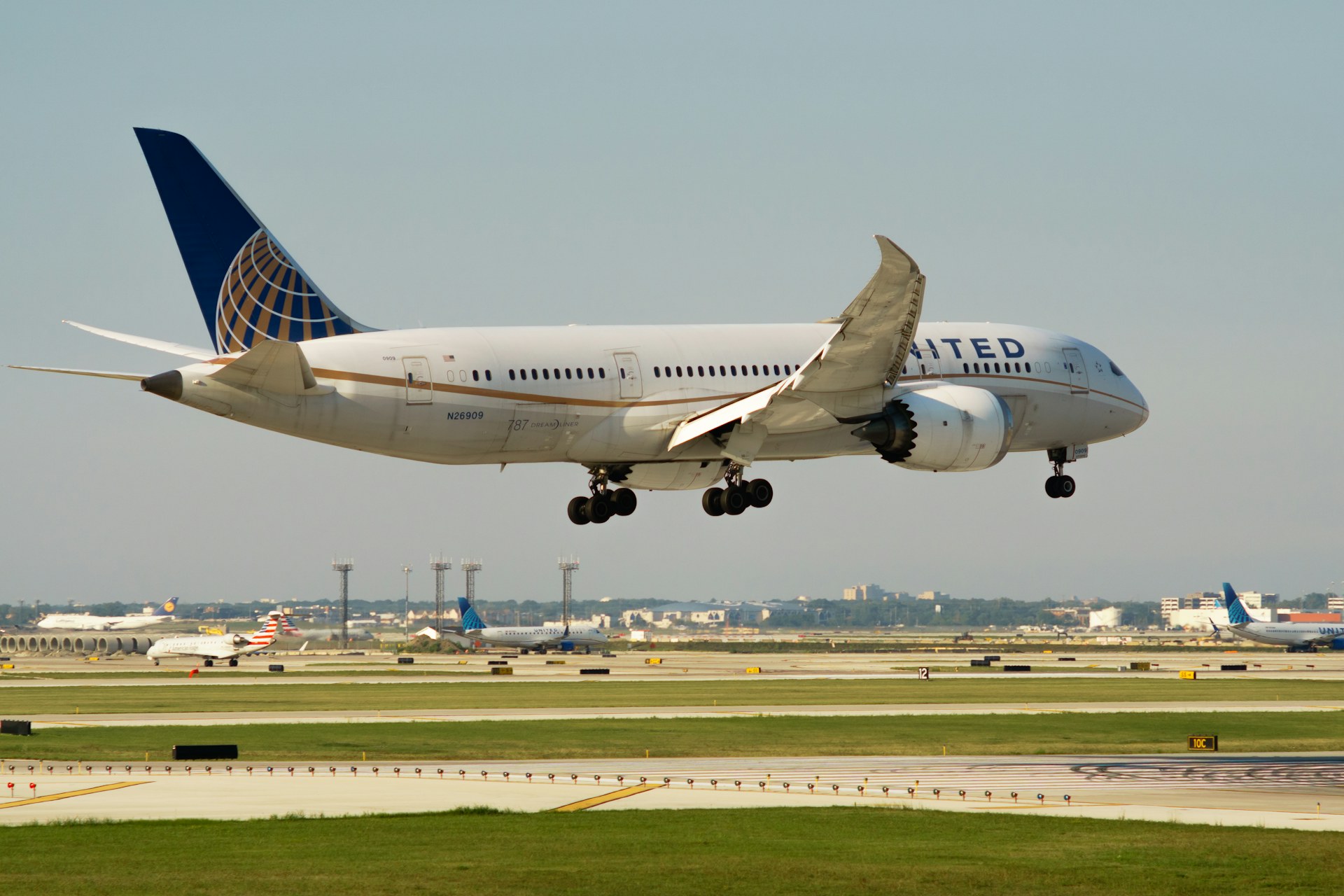
For most Milwaukee-area travelers, the answer looks obvious: Milwaukee Mitchell International Airport (MKE) is 5.8 miles from downtown Milwaukee, easy to navigate, and gets you to the gate in minutes. But Chicago O’Hare International Airport (ORD) is 80 miles down the I-94 and serves more than 180 destinations — including international routes, premium cabin products, and connections that MKE simply can’t match. The right choice depends on where you’re going, how much the fare gap is, and what your door-to-door time actually looks like. This guide covers every factor side by side so you can make the call based on your specific trip. For Milwaukee airport transfer service from either airport, Chicago O’Hare Limo Service operates flat-rate rides on both routes.
MKE at a Glance: Milwaukee Mitchell International Airport Facts
Milwaukee Mitchell International Airport handled 5,874,372 passengers in 2025 — a 7% decrease from the prior year, partly driven by Spirit Airlines exiting the market and Southwest reducing schedules. That volume puts MKE in the medium-regional tier, roughly comparable in scale to airports serving cities like Richmond, Virginia or El Paso, Texas.
The physical layout is simple: one terminal, two concourses (C and D), and 38 gates. Concourse C houses Southwest and United Airlines. Concourse D is home to Delta — which operates a Delta Sky Club here — plus American Airlines, Alaska, and regional carriers. There’s no inter-terminal train, no massive people-mover, no underground walkway maze. From curb to gate, most travelers clear security and reach their gate in under 20 minutes on a normal day.
The airport is actively expanding. As of September 2025, construction has started on a new international Concourse E — a dedicated international arrivals facility with a modern U.S. Customs and Border Protection processing center rated for 400 international arrivals per hour, nearly triple the current capacity. Target completion is 2027. When Concourse E opens, MKE will be positioned to attract more international routes than it can handle today.
| Data Point | MKE Figure |
|---|---|
| Annual passengers (2025) | 5,874,372 |
| Terminals | 1 |
| Concourses / Gates | 2 concourses (C, D) / 38 gates |
| Distance to downtown Milwaukee | 5.8 miles south |
| Largest carrier by market share | Southwest Airlines (40.81%) |
| Nonstop destinations (2026) | 36 |
| International customs (CBP) | Yes — limited capacity; new Concourse E 2027 |
| Economy parking (Saver Lot) | $8/day |
ORD at a Glance: O’Hare International Airport Facts
Chicago O’Hare International Airport is a different category of facility. In 2025, O’Hare handled 84,851,825 passengers — roughly 14 times MKE’s volume — and recorded more aircraft movements than any other airport on earth. Four terminals, nine lettered concourses, and 215 gates spread across a campus that can feel like a small city.
Terminal 1 and Terminal 2 house United Airlines operations: mainline flights in T1 with Lufthansa and All Nippon Airways as international tenants, regional United Express in T2 alongside Air Canada and JetBlue. Terminal 3 is American Airlines’ hub — the largest terminal by footprint, with four concourses (G, H, K, L) and international partners including British Airways, Japan Airlines, and Aer Lingus. Terminal 5 handles international arrivals under CBP processing plus domestic service from Delta, Frontier, and Southwest. The Airport Transit System (ATS) connects the terminal core (T1–T2–T3) to Terminal 5 — T5 has no walking connection to the other terminals.
O’Hare is in the middle of its O’Hare 21 modernization: an $8.5 billion capital program that includes replacing Terminal 2 with a planned Global Terminal, expanding gate count from 185 to 235, and adding more than 3 million square feet of terminal space. Target completion for the major phases runs through approximately 2030.
| Data Point | ORD Figure |
|---|---|
| Annual passengers (2025) | 84,851,825 |
| Terminals | 4 (T1, T2, T3, T5) |
| Concourses / Gates | 9 concourses / 215 gates |
| Distance to downtown Chicago | ~17 miles northwest |
| Distance to downtown Milwaukee | ~80 miles via I-94 |
| Primary hubs | United Airlines + American Airlines |
| Nonstop destinations | 180+ |
| International customs (CBP) | Full CBP at Terminal 5 |
| Economy parking (Lot G) | $15/day (shuttle required) |
MKE vs ORD Side-by-Side: The Complete Comparison
Before going deeper on each factor, here’s the full side-by-side view. If you’re in a hurry, this table gives you the verdict at a glance.
| Factor | MKE (Milwaukee Mitchell) | ORD (O’Hare) | Advantage |
|---|---|---|---|
| Annual passengers (2025) | 5.87 million | 84.85 million | Scale: ORD |
| Terminals / Gates | 1 terminal / 38 gates | 4 terminals / 215 gates | Simplicity: MKE |
| Distance to Milwaukee downtown | 5.8 miles (~10–15 min) | ~80 miles (~75–105 min) | MKE by far |
| Nonstop destinations | 36 | 180+ | ORD by far |
| International routes | Limited (seasonal Mexico/Caribbean) | Full network (Europe, Asia, etc.) | ORD |
| Largest airline | Southwest (40.81%) | United + American (dual hub) | Depends on loyalty |
| Economy parking/day | $8 (Saver Lot) | $15 (Lot G) — shuttle required | MKE |
| TSA wait (typical) | 10–30 min | 15–45+ min at peaks | MKE |
| CBP / customs | Limited; Concourse E 2027 | Full processing at T5 | ORD (today) |
| Amtrak access | Rail Station 3/4 mi from terminal | Via CTA to Union Station | MKE (direct route stop) |
| Best for Green Bay / Madison | 120 mi to Lambeau; 75 mi to Madison | 200+ mi to Lambeau; 150 mi to Madison | MKE clearly |
| Best for international travel | Limited options today | 40+ international carriers | ORD |
For Chicago to Milwaukee limo service, professional ground transport connects both airports to your Milwaukee-area destination — MKE runs are short; ORD runs are flat-rate I-94 transfers.
How Far Is Each Airport from Downtown Milwaukee?
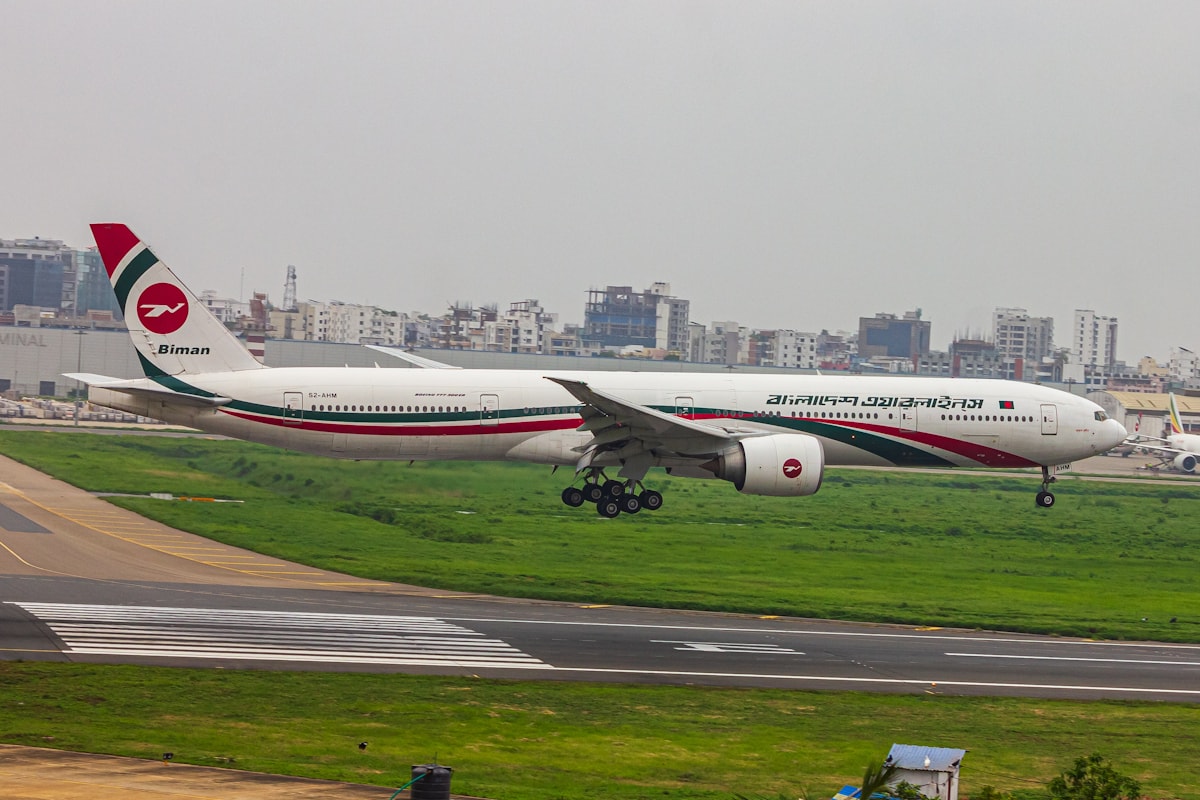
This is the single most important practical difference between the two airports for most travelers.
MKE: Milwaukee Mitchell International Airport sits 5.8 miles south of downtown Milwaukee on South Howell Avenue. In normal traffic, that’s a 10–15 minute drive. Even in light congestion, it rarely exceeds 20 minutes. The airport is inside the city — on-ramps are close, parking is right there, and the whole process from landing to leaving the property takes under an hour for a domestic arrival.
ORD: The road distance from O’Hare to downtown Milwaukee is approximately 80 miles via the I-94 corridor. Under ideal conditions — early morning, no construction, light I-94/I-43 traffic — that’s about 75 minutes. During peak drive hours, Chicago freeway traffic can push that to 90–105 minutes. Add the ORD parking and terminal transit time, and a typical ORD arrival is running 2.5–3 hours total before you’re in downtown Milwaukee.
For Milwaukee suburbs west of the city, the ORD gap shrinks slightly: Brookfield is about 70 miles from ORD (~65–85 minutes), Waukesha about 72 miles, Wauwatosa about 75 miles. For destinations farther north or west, the distance compounds: Madison is ~75 miles from MKE (~1h15m) versus ~150 miles from ORD (~2h30m); Green Bay is ~120 miles from MKE (~1h45m) versus ~200+ miles from ORD (~3h+).
The I-94 corridor Chicago to Milwaukee is well-established for professional ground transport — it’s the primary route from ORD when MKE isn’t the right answer. But the math is clear: unless the fare or destination gap is substantial, MKE saves you significant time on every trip.
Airline Coverage: What Flies Nonstop from MKE vs ORD
Milwaukee Mitchell (MKE) — 36 nonstop destinations as of 2026:
Southwest is the dominant carrier at 40.81% market share, operating from Concourse C. Southwest’s MKE nonstop network covers Austin, Baltimore, Boston, Dallas Love, Denver, Kansas City, Las Vegas, Miami, Nashville, New York LaGuardia, Orlando, Phoenix, San Diego, St. Louis, Tampa, and Fort Lauderdale (seasonal). Delta (Concourse D) covers Atlanta, Boston, Detroit, JFK, LaGuardia, Minneapolis, and Salt Lake City. American covers Charlotte, Dallas/Fort Worth, Philadelphia, and Washington Reagan. United covers Denver, Houston Intercontinental, Newark, and Chicago O’Hare. Alaska flies nonstop to Seattle. Frontier and Sun Country cover seasonal leisure routes. Notable 2026 addition: Southwest launches MKE–MDW (Chicago Midway) nonstop service starting March 5, 2026.
O’Hare (ORD) — 180+ nonstop destinations:
ORD adds the international gateways, hub connections, and premium cabin products MKE can’t replicate. London Heathrow, Frankfurt, Tokyo, São Paulo, Dubai, Dublin, Madrid, Beijing, Seoul, Amsterdam — plus secondary U.S. cities not served from MKE. American’s Flagship Business and United’s Polaris business class both originate at ORD. If your itinerary involves Europe, Asia, the Middle East, or a city MKE doesn’t serve nonstop, ORD is the only option.
The practical gap: MKE covers most common U.S. domestic routes for Milwaukee-area travelers. The gap is widest for international travel and for connecting through secondary hubs. If you’re flying to Phoenix, Orlando, Denver, or Las Vegas — all nonstop from MKE — there’s no reason to drive to ORD.
Airfare: Is Flying from MKE Cheaper or More Expensive Than ORD?
MKE typically carries higher per-seat fares than ORD on routes both airports serve. The reason is structural: fewer seats, less competition, and the exit of ultra-low-cost carriers (Spirit departed the Milwaukee market entirely in 2025 amid its bankruptcy restructuring, removing a pricing anchor). ORD’s dual-hub structure — United and American both competing for the same business traveler — creates pressure that keeps fares lower on many routes, particularly in premium cabins.
Where MKE wins on price: Southwest’s nonstop network is often well-priced on leisure routes to Las Vegas, Orlando, Phoenix, and Tampa. Southwest doesn’t match fares on Google Flights in the same way — check Southwest.com directly.
Where ORD wins on price: Anything involving a premium cabin (business, first), most transatlantic routes, and routes where United or American price aggressively.
Practical guidance: For the same domestic route, check both airports. Add the cost of 80 miles of ground transport from ORD (parking, gas, or a professional car service) to the ORD fare and compare the true door-to-door cost against MKE. Sometimes the ORD fare savings evaporate once ground transport is factored in.
Parking Rates at MKE vs O’Hare
Milwaukee Mitchell (MKE) parking:
- Saver Lot (economy, outdoor): $8/day
- Surface Lot: $2/hour, $15/day
- Parking Garage: $14–24/day depending on section
- Valet: $28/day
- First 30 minutes in garage: free
O’Hare (ORD) parking:
- Economy Lot G (outdoor, shuttle required): $15/day
- Economy Lot F (covered, Multimodal Facility, shuttle required): $22/day
- Note: Lot G and Lot H frequently fill; travelers are often routed to Lot F at $22/day
The walk from MKE’s Saver Lot to the terminal is short. Getting from ORD’s Economy Lot G requires a shuttle bus every 5–15 minutes, then the ATS from the Multimodal Facility to the terminal complex — add 15–20 minutes each direction. For a 4-day trip: $32 at MKE versus $60–88 at ORD.
Ground Transportation from MKE to Milwaukee
MKE’s location 5.8 miles from downtown Milwaukee makes the ground trip simple regardless of mode.
Rideshare/taxi: 10–15 minutes to downtown; fares to most Milwaukee suburbs typically under $25–35.
MCTS bus: Public transit service from the terminal; serves downtown Milwaukee routes.
Amtrak Hiawatha: The Milwaukee Airport Rail Station sits approximately 3/4 of a mile from the terminal — a shuttle or short taxi connects you. The Hiawatha runs six round trips Monday–Saturday and five on Sundays between Milwaukee and Chicago, stopping at the airport station and Milwaukee Intermodal Station downtown.
Rental car: On-property at MKE; no shuttle required.
Professional chauffeur service: Mitchell airport transportation via Chicago O’Hare Limo Service operates flat-rate pickups from MKE’s commercial vehicle staging zone. For business travelers or groups, the flat rate to Milwaukee suburbs is predictable regardless of traffic.
Ground Transportation from O’Hare to Milwaukee
Getting from ORD to Milwaukee involves more logistics than MKE, but the routes are well-established.
Drive / rental car: I-94 East to I-894 or I-43 North — 80 miles, 75–105 minutes depending on traffic. Toll roads apply.
Professional chauffeur service: ORD car service from Chicago O’Hare Limo Service stages at the Multimodal Facility commercial vehicle zone and provides flat-rate transfers to Milwaukee and surrounding suburbs. No surge pricing. No waiting for a rideshare driver who may not take the 80-mile fare. For business travelers billing to a corporate account, this is often the simplest option. O’Hare ground transportation via professional service means your vehicle is staged and confirmed when you land.
Coach USA / Badger Bus: I-94 bus service from the Chicago Rosemont Transit Center (CTA Blue Line from ORD) to Milwaukee Intermodal Station. Approximately 2.5–3 hours door-to-door. Fares typically $16–35 one-way.
CTA Blue Line: Takes you from ORD to downtown Chicago in about 45 minutes — useful if you need Union Station for the Amtrak connection, not a direct Milwaukee route.
Amtrak (indirect): Take CTA Blue Line or a rideshare from ORD to Chicago Union Station, then board the Hiawatha for the ~90-minute ride to Milwaukee. Total transfer from ORD arrival to Milwaukee typically runs 2.5–3.5 hours depending on connections.
The Hiawatha Amtrak: A Third Option Worth Knowing
The Hiawatha Service is an Amtrak corridor running 86 miles between Chicago Union Station and Milwaukee Intermodal Station, with stops at Glenview (Illinois), Sturtevant (Wisconsin), and Milwaukee Airport Rail Station (adjacent to MKE terminal). Travel time is approximately 90 minutes city center to city center.
Frequency: six round trips Monday–Saturday, five on Sundays. The Milwaukee Airport stop makes the Hiawatha a practical option for travelers arriving into Milwaukee who want rail rather than driving — board at Union Station (reachable from ORD via CTA or taxi), ride 90 minutes, and step off at the airport station or continue to Milwaukee Intermodal downtown. In October 2024, the corridor received a $72.8 million federal grant to build a freight bypass track, which could eventually enable one additional round trip per day.
TSA Security Wait Times: MKE vs ORD
MKE: Security wait times at Milwaukee Mitchell are consistently shorter than at major hubs. Typical waits run 10–30 minutes. During peak periods, lines can extend to 45 minutes for general boarding — but PreCheck and CLEAR lanes remain short. TSA PreCheck is available at Concourse C (3:00 AM–7:00 PM daily) and Concourse D (3:00 AM–10:00 PM daily).
ORD: With 84 million passengers annually, ORD’s security volume is larger. Waits of 15–30 minutes are common in off-peak hours; during peak morning and evening banks, waits can extend past 45 minutes at busy checkpoints.
Arrival recommendation: Both airports advise arriving 2 hours before domestic departures and 3 hours before international. At MKE, this buffer is conservative for most domestic travel — but it’s the right discipline for both airports in winter.
Customs and Border Protection: MKE vs ORD for International Travel
MKE: Milwaukee Mitchell operates as an official CBP port of entry with Global Entry available. Current international service is limited — primarily seasonal routes to Mexican beach destinations and occasional charters. The new Concourse E (targeted 2027) changes this: the new CBP facility is rated for 400 international arrivals per hour, and flexible-use gates are designed to attract international service year-round.
ORD Terminal 5: Full CBP processing for hundreds of international flights per day. Global Entry Kiosks. Mobile Passport available. Wait times range from 15 minutes on quiet international banks to 90+ minutes when multiple widebody arrivals process simultaneously.
Verdict: For international travel today, ORD is the practical choice — MKE’s international network is limited to seasonal leisure routes. By 2027, MKE’s Concourse E expansion may change the calculus on specific routes, but the gap remains significant for the foreseeable future.
Weather and Cancellation Risk: Lake Effect vs Hub Chaos
Both airports are exposed to Chicago-Milwaukee-area winter weather, but the pattern of disruption is different.
Milwaukee sits on the western shore of Lake Michigan. Lake-effect snow from the lake runs independently of Chicago weather systems — MKE can see heavy lake-effect accumulation on days when O’Hare is clear, and vice versa. In January 2024, MKE remained operational during a winter storm event that generated major cancellations at ORD.
ORD’s disruption pattern is different: its volume means weather events cascade harder. When an FAA ground stop hits ORD — as occurred in March 2026 during a severe weather system — the ripple effect affected hundreds of delays and cancellations in a single day. MKE’s smaller operation may have fewer flights affected in absolute terms, though proportionally it can still see significant disruption.
Practical guidance: In winter, check both airports for delays before booking and consider travel insurance for Milwaukee-area departures. Neither airport is immune to Midwest winter weather, but the disruption profile differs: ORD tends toward large-scale cascades when weather hits; MKE tends toward occasional shorter closures.
For Business Travelers: When MKE Wins vs When ORD Is Worth the Drive
Choose MKE when:
- Your destination is served nonstop from MKE (Charlotte, Philadelphia, D.C. Reagan, Atlanta, Detroit, Denver, Minneapolis, Houston, Newark, Seattle — all nonstop)
- Your endpoint is Milwaukee, Waukesha, Brookfield, or anywhere in the Milwaukee metro
- You’re on a tight schedule — door-to-gate at MKE can run under 45 minutes
- You want predictable, shorter security lines
- You’re flying domestic economy
Choose ORD when:
- Your destination requires a hub connection or an international routing
- You’re flying business or first class and need United Polaris or American Flagship Business
- The fare difference — after accounting for 80-mile ground transport — is materially lower at ORD
- You’re combining a Milwaukee and Chicago stop on the same trip
- You need connections to destinations MKE doesn’t serve nonstop
For Milwaukee business travel from Chicago, professional ground transport from ORD is a standard part of the equation — business travelers arriving into ORD for a Milwaukee meeting don’t want to rent a car and navigate I-94 in construction traffic. A flat-rate transfer handles the 80-mile leg while you’re on calls.
For Lambeau and Madison: MKE Is Almost Always the Right Call
Green Bay / Lambeau Field: From MKE: ~120 miles north via I-43, approximately 1 hour 45 minutes. From ORD: ~200+ miles via I-94 North to I-43 East, approximately 3+ hours. For Packers games, Lambeau Field concerts, or any Green Bay-area destination, MKE isn’t just more convenient — it’s a dramatically shorter drive.
Madison / Dane County: From MKE: ~75 miles via I-94 West to US-18, approximately 1 hour 15 minutes. From ORD: ~150 miles, approximately 2 hours 30 minutes. Note: Dane County Regional Airport (MSN) in Madison also serves Madison directly — worth checking for Madison-originating travelers.
The rule of thumb: if your final Wisconsin destination is north or west of Milwaukee, MKE wins on ground time by a wide margin. The ORD advantage in route selection rarely overcomes a 1–2 hour ground time penalty to destinations in the northern half of the state.
The Verdict: MKE or ORD for Milwaukee Travel?
Default to MKE. For most Milwaukee-area travelers flying domestic routes, Milwaukee Mitchell International Airport is the right choice. It’s close, simple, easy to park at, fast through security, and serves the major U.S. hubs and leisure destinations that most travelers need. The 5.8-mile drive from downtown Milwaukee is genuinely shorter than most people’s commutes.
Drive to ORD when: Your destination isn’t served nonstop from MKE, you’re flying internationally, you need a premium cabin product, or the fare difference covers the added ground time and cost of getting to and from O’Hare.
Chicago O’Hare Limo Service is a limousine service providing professional chauffeur transportation from both Milwaukee Mitchell International Airport and Chicago O’Hare International Airport. Whether your client lands at MKE 5 miles from their Milwaukee hotel or needs a flat-rate transfer from ORD after a transatlantic flight, our licensed chauffeurs handle the ground leg — no surge pricing, no rideshare availability roulette, no waiting. For professional Chicago Milwaukee corporate travel, the airport decision becomes purely a flight routing question — we handle the rest.