The question usually surfaces at the worst moment: you land at O’Hare on a Thursday afternoon, pull up a rideshare app, and see a 1.9x surge multiplier on a route you’ve taken for $45. The premium ride-hail tier quote reads $198. A flat-rate car service you could have booked this morning would have cost $105. You take the expensive ride-hail because you didn’t plan ahead, and you spend the ride wondering if there’s a smarter way to handle this.
Chicago O’Hare Limo Service is a limousine service providing professional chauffeur transportation to and from O’Hare International Airport (ORD), Midway (MDW), and throughout the Chicago metropolitan area. Chicago O’Hare Limo Service operates licensed SUVs with commercially trained chauffeurs, flat-rate pricing, and real-time flight monitoring — the operational model that sits on the opposite end of the spectrum from on-demand rideshare.
This guide covers the full comparison: pricing structures, surge pricing patterns in Chicago, driver licensing, insurance requirements, airport pickup logistics, corporate billing, and when each option actually makes sense. Both rideshare and professional car service have their place — the goal here is to help you match the right tool to the trip.
Flat Rate vs Surge Pricing: The Core Cost Difference
The fundamental structural difference between a professional black car service and rideshare is how the price is set. A licensed car service quotes a pre-negotiated flat rate at the time of booking — the number you see is the number you pay, whether traffic backs up on the Kennedy Expressway or a winter storm pushes every rideshare driver off the road.
Rideshare pricing is dynamic. The algorithm responds to demand in real time: when more people request rides than drivers are available, the multiplier goes up. The standard ride-hail tier from O’Hare to downtown Chicago runs $35–$55 at off-peak hours. The premium app-based ride tier runs $80–$120 base. Professional black car service on the same route typically runs $95–$115 for a sedan (flat rate, all-in).
| Factor | Professional Black Car | Uber Black | UberX |
|---|---|---|---|
| Pricing model | Flat rate, pre-negotiated | Dynamic (surge-enabled) | Dynamic (surge-enabled) |
| ORD to downtown base | $95–115 (sedan) | $80–120 | $35–55 |
| Rush hour typical | Same flat rate | $120–175+ (1.5–2x) | $65–105+ |
| Winter storm scenario | Same flat rate | 2x–3x surge possible | 2x–3x surge possible |
| Advance booking | Required (recommended 24 hrs+) | Optional (Reserve feature) | On-demand |
| Driver confirmed in advance | Yes — name, vehicle, contact | Reserve only; not guaranteed | No |
| Complimentary wait time at ORD | 60 min domestic | 60 min (Black, Reserve) | 45 min (Reserve) |
When Surge Pricing Makes Rideshare More Expensive Than a Limo
Surge pricing is not a rare anomaly — it’s a predictable feature of how rideshare economics work, and it concentrates around exactly the times business travelers need rides.
A 2018–2019 analysis of 129 million Chicago rideshare trips by data researcher Todd Schneider found that baseline surge runs 1.0x–1.4x for most periods, but spikes to 1.5x–3.2x during high-demand events. A Rolling Stones concert in June 2019 pushed surge to 3.2x at midnight. Heavy rain events drove 2x–3x multiples. The dataset predates recent years but the algorithm structure is unchanged — demand exceeds supply, price goes up.
Business travel peak windows overlap precisely with the highest demand periods: Monday morning ORD departures (6–9 AM), Thursday and Friday afternoon returns (4–7 PM), and any travel tied to major Chicago events. A Monday-morning O’Hare pickup at 1.8x surge pushes the premium app-based ride tier to $144–$216 — above the flat rate for professional car service. At 2x surge, the math is unambiguous in the flat-rate service’s favor.
The crossover point is approximately 1.8x: above that level, the premium ride-hail tier costs more than professional service for the ORD-to-downtown route. The standard ride-hail tier surges past the professional rate at roughly 2.2x–2.5x.
When Rideshare Wins on Cost
Rideshare is cheaper for short, spontaneous, off-peak trips in the city. A standard ride-hail from River North to the West Loop at 2 PM on a Tuesday runs $12–$18 — a professional car service would be disproportionate for that use case. Rideshare is also the only practical option when you need a car immediately and didn’t plan ahead.
For airport runs that don’t require precision timing — a 10 AM mid-week departure on a clear day — the standard rideshare option is a reasonable, cost-effective choice. The decision calculus shifts when the trip is time-critical (early morning, international arrival), weather-exposed, or part of a client-facing or executive travel itinerary.
How Chicago Licenses Black Car Services vs Rideshare Drivers
Chicago regulates commercial passenger vehicles through the Bureau of Business Affairs and Consumer Protection (BACP). The two relevant regulatory tracks are substantially different.
Black car / livery vehicles require a Chicago Livery Vehicle License (annual renewal, $500 fee) and the driver must hold a Chicago Public Chauffeur License. The Public Chauffeur License requires applicants to submit to fingerprinting and pass a National/FBI and State criminal background check at a BACP-approved fingerprint agency — results are transmitted directly to BACP. A license is not issued until the applicant passes.
Rideshare drivers (Uber, Lyft) operate under Chicago’s Transportation Network Provider ordinance — Chapter 9-115 of the Municipal Code of Chicago, which went into effect September 2, 2014. TNP drivers must hold a City of Chicago TNP Chauffeur License. The background check for TNP drivers is conducted via third-party screening company — it does not require fingerprinting.
The practical difference: fingerprint-based FBI checks surface records that name-based automated checks can miss. The National Employment Law Center has documented that fingerprint checks identify a materially higher rate of disqualifying incidents than name-based screening — though the exact percentage varies by dataset and cannot be independently confirmed from a single source.
Insurance — What Each Service Carries
The insurance structure for each service type in Chicago differs, with one counterintuitive result.
Chicago livery vehicles (black car/limo) are required to carry a minimum of $350,000 combined single limit per occurrence (BACP requirement). Many professional operators carry substantially more — $1M+ commercial liability is common at the premium tier — but the municipal floor is $350,000.
Chicago TNP companies must provide $1,000,000 per occurrence commercial general liability and commercial auto liability, per the Chapter 9-115 ordinance. Both policies must name the City of Chicago as additional insured.
On paper, the TNP minimum is higher. The nuance is in timing: TNP insurance coverage phases in and out based on app status. The $1M coverage applies during the active trip. Coverage during the period when the app is on but no ride is accepted may differ — drivers in that phase may be covered under their personal policy, which often excludes commercial activity. Professional black car operators maintain continuous commercial coverage because the vehicle is always operated commercially.
For business travelers: ask your car service provider for their certificate of insurance before the first trip. A credible operator provides this without hesitation.
Driver Vetting — Background Checks Side by Side
The vetting gap between professional chauffeurs and rideshare drivers comes down to depth, frequency, and drug testing.
Chicago Public Chauffeur License (required for professional black car): FBI fingerprint background check via BACP-approved agency; National and State criminal history; results sent directly to BACP; license not issued until the applicant passes.
Chicago TNP Chauffeur License (ride-hail platform drivers): third-party automated background check; no fingerprint requirement; annual rechecks required.
Drug testing: Professional car service companies typically conduct pre-employment drug screening and, at many operators, periodic or random testing as a condition of employment. The TNP ordinance does not mandate ongoing drug testing for rideshare drivers. (This is industry practice, not a universal rule — verify with any specific operator.)
Training: Professional chauffeurs at licensed car services typically receive formal training covering defensive driving, airport pickup protocols, executive service etiquette, and emergency procedures. Ride-hail platform driver onboarding is app-based orientation. The gap is not a legal requirement in the TNP ordinance — it’s an operational choice made by professional operators who stake their business reputation on every ride.
O’Hare Pickup Zones — Where Each Service Stages
The logistics differ significantly between how rideshare and professional car service operate at ORD, and travelers who don’t know this often end up on the wrong curb.
Rideshare at ORD: Standard ride-hail pickups (economy, comfort, and XL tiers) stage on the Departures level of Terminal 2. Premium rides (high-end ride-hail SUV tiers) pick up on the Arrivals level of any terminal. The exact location varies based on construction phases and airport regulations — the app provides the specific pickup point.
Commercial vehicle zones: Licensed limo and executive car operators use designated commercial vehicle staging zones separate from the standard arrivals curb. These zones are authorized by the Chicago Department of Aviation through a specific commercial vehicle operating permit. The commercial zone is quieter, pre-staged, and separated from the rideshare-matching congestion on the arrivals curb.
When you exit baggage claim at ORD and walk toward the arrivals curb, you’re heading toward the rideshare scrum — dozens of drivers circling or staging at the curb, app-matching passengers arriving simultaneously. The commercial staging zone for licensed operators is adjacent but distinct; your chauffeur sends a confirmation text once staged, and you walk directly to the vehicle.
For a full breakdown of each terminal’s ground transportation layout, see the O’Hare ground transportation guide. For international arrivals at Terminal 5, customs processing adds 45–90 minutes from touchdown to the commercial pickup zone — professional chauffeurs account for this window; rideshare operates on-demand.
Flight Tracking — How Professional Chauffeurs Monitor Your Arrival
A pre-arranged car service does not start the clock when your plane lands. It starts tracking your inbound flight as soon as your booking is confirmed.
Real-time flight monitoring allows a professional chauffeur to stage the vehicle at the commercial pickup zone approximately 8–12 minutes before the estimated time your bags arrive at claim — accounting for gate distance, ATS transit time if applicable, and typical baggage belt timing for that airline.
If your flight is delayed 40 minutes, the chauffeur delays staging 40 minutes. You don’t wait on the curb. You don’t pay extra.
The ride-hailing advance-booking feature offers partial flight tracking — the app updates the driver on schedule changes for reserved rides. Standard on-demand rideshare apps have no flight tracking. With on-demand ride-hail, you request after landing, matching begins after your request, and the driver’s estimated arrival is calculated from that point. For a 6:45 AM arrival with a tight window to reach a 9 AM board meeting, the difference between “driver already staged” and “driver 12 minutes away after your request” is material.
Complimentary Wait Time — What Each Service Offers
Professional black car: Standard industry practice is 60 minutes complimentary wait time for domestic arrivals and 90 minutes for international arrivals. This covers normal baggage claim delays, Customs processing time at T5, and most gate-to-curb transit times. Verified flight delays do not generate additional charges.
Uber Reserve at O’Hare: Standard rides (economy, comfort, and XL tiers) have a 45-minute grace period from scheduled arrival time before late fees apply. Premium rides (premium black tier, Black SUV) have a 60-minute window, per the platform’s ORD airport pickup policy.
Standard on-demand rideshare (non-reserved): Standard grace period is much shorter — a per-minute waiting fee applies once the driver arrives and you haven’t appeared. If you’re still at baggage claim when your driver cancels, you re-enter the queue.
4 AM Departures and Late-Night O’Hare Availability
Both rideshare and professional car service list 24/7 availability. The distinction emerges in practice at 4 AM on a January morning at O’Hare.
Rideshare supply is thin in pre-dawn hours at any major airport. Drivers who would accept a long airport trip at peak hours may not be staging near ORD at 3:45 AM. Wait times extend. Surge pricing — which activates on supply-demand imbalance — can spike during low-supply pre-dawn windows. In Chicago winters, weather events compound both effects.
A pre-scheduled professional car service commits a driver to that pickup at the time of booking. The driver stages at the commercial zone before your departure time, independent of how many other rides are requested that morning. There is no matching algorithm to fail. If your first flight out is at 5:30 AM and you need to leave by 4 AM — in January, from the suburbs — this is the scenario where pre-scheduled professional service reduces risk most meaningfully.
Corporate Billing and Expense Reporting
The billing architecture of professional car service and rideshare diverges sharply at the enterprise level.
Professional Chicago airport transportation: Monthly consolidated invoices, cost-center and department coding per trip, authorized traveler lists (only approved employees can book to the account), dedicated account managers, negotiated volume rates for frequent fliers, and detailed trip reports compatible with corporate T&E systems.
App-based ride platforms: Receipt aggregation and trip history, basic expense integration with some T&E platforms. No consolidated monthly invoice equivalent, no dedicated account management at standard tier.
The billing difference matters for finance and compliance teams. One monthly invoice covering 40 executive airport trips is simpler to process than 40 individual app receipts. Cost-center coding lets finance allocate transportation expense by client, project, or department automatically. Survey data from corporate travel managers suggests many large companies mandate professional car service for C-suite executives and restrict rideshare for sensitive client travel — though specific percentages vary by survey and should be treated as directional.
Privacy and Confidentiality for Executive Transport
A rideshare vehicle is a shared commercial platform. The driver is an independent contractor with no formal confidentiality obligations. There is no expectation of privacy in the legal or professional sense.
Professional chauffeurs at licensed car services operate under the standards set by their employer — which for executive transport clients typically includes discretion protocols. Some operators offer NDAs for clients transporting sensitive information or conducting calls during transit. In-vehicle conversations are treated as confidential as a matter of professional practice.
For business travelers conducting M&A discussions, legal strategy, or board-level conversations during transit to or from O’Hare, the professional car service vehicle provides a meaningfully more private environment.
Vehicle Standards — Fleet Age, Model, and Maintenance
Professional black car fleet: Company-owned or closely managed vehicles. Fleet age at professional operators is typically capped at 3–5 years. Vehicles are inspected on a regular schedule set by the company. The vehicle class is guaranteed — if you booked an SUV, you receive an SUV, not whatever driver happens to accept your request.
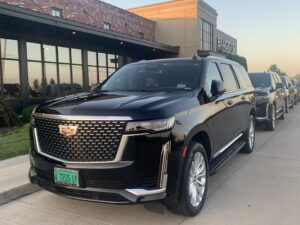
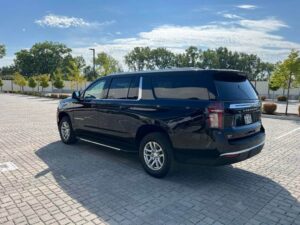
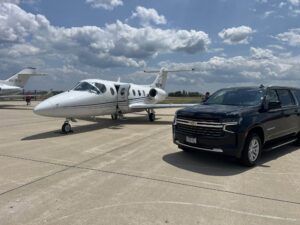
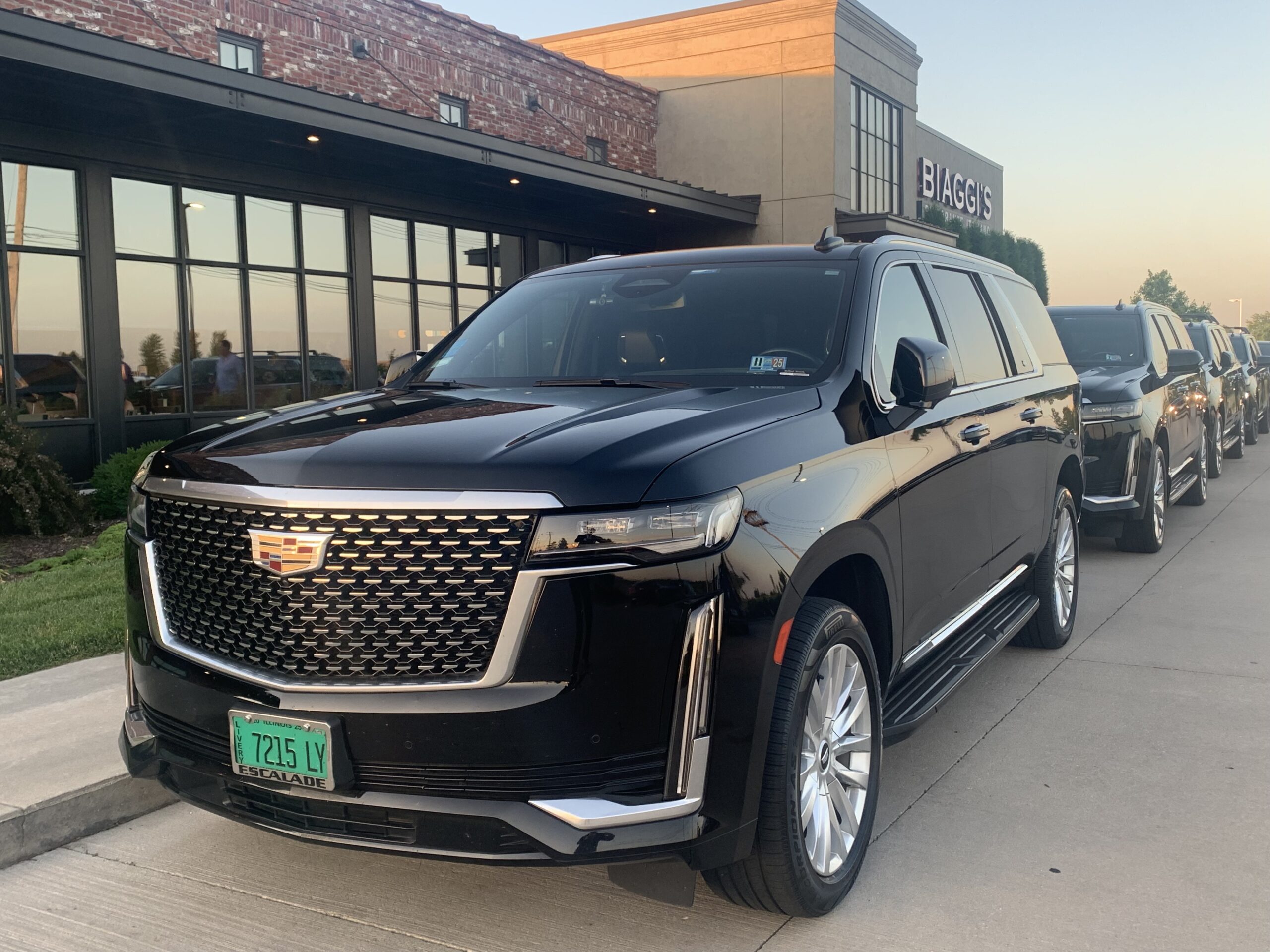
Chicago O’Hare Limo Service operates late-model luxury SUVs — Tahoe and Suburban class — with leather seating, climate control, charging ports, and complimentary water. The amenities are consistent across every ride because the fleet is standardized.
Rideshare vehicles: Chicago ride-hail platform requirements allow vehicles up to 15 years old, subject to state inspection standards. Annual inspections are required. There is no model guarantee — you know the service tier but not the specific vehicle.
Chicago Traffic and Route Intelligence
The Kennedy Expressway (I-90) is the primary ORD-to-downtown route: 17 miles, 25–70 minutes depending on traffic conditions. Rush hour, construction, and weather events stretch the upper range substantially.
Professional chauffeurs who work the ORD corridor regularly develop route familiarity that goes beyond app navigation defaults — I-294 bypass options, surface street alternatives during Kennedy gridlock, and knowledge of which construction phases affect which approach roads. Rideshare routing is app-driven and may default to the most straightforward option regardless of real-time conditions. This is a consistent differentiator reported by frequent ORD users, though driver quality varies.
Corporate Travel Policy — What Companies Require
Corporate ground transportation policies have tightened in recent years around two axes: executive security and expense predictability.
Many large companies now require professional car service (not rideshare) for C-suite travel, client entertainment transport, and late-night executive movement. The rationale spans insurance coverage gaps, driver vetting depth, and the liability exposure of an unverifiable rideshare driver for high-value personnel. These restrictions are most common at financial services, legal, and consulting firms.
For business travelers: check your company’s ground transportation policy before booking. If your company has a preferred car service vendor or requires professional service above a certain seniority level, the choice is already made.
Is a Premium Ride-Hail Tier the Same as a Professional Black Car Service?
No — and the confusion is common enough to warrant a direct answer.
Uber Black is a product tier within the ride-hail platform. Drivers who qualify for Uber Black must maintain a 4.85+ star rating and operate a vehicle under 5 years old. Beyond that, they are independent contractors using the platform, subject to TNP licensing requirements.
A professional black car service is a licensed commercial transportation company. It employs or contracts chauffeurs who hold Chicago Public Chauffeur Licenses (FBI background check required), operates company-maintained or closely managed vehicles, carries commercial liability insurance, and is accountable for service standards as a business entity.
The price overlap between the premium ride-hail tier and professional car service is real — at off-peak hours and without surge, the gap is small. The service difference is in consistency, accountability, corporate billing capability, and the licensing and vetting standards described above.
Booking a Black Car vs Opening a Rideshare App: The Decision Framework
Use a professional black car service when: traveling to or from O’Hare or Midway, especially for morning departures or international arrivals; the trip is client-facing or represents your company; you need corporate billing with cost-center coding; weather conditions are poor; you’re traveling before 6 AM or after 10 PM; or you cannot afford to wait if a driver cancels.
Use rideshare when: short, spontaneous, in-city trip at off-peak hours; budget is the primary constraint and timing is flexible; non-airport point-to-point where surge is unlikely.
For flat-rate Chicago limo pricing from O’Hare to your destination, Chicago O’Hare Limo Service publishes rates that cover all fees with no surge. Bookings are available 24/7 for early-morning departures and late-night international arrivals.